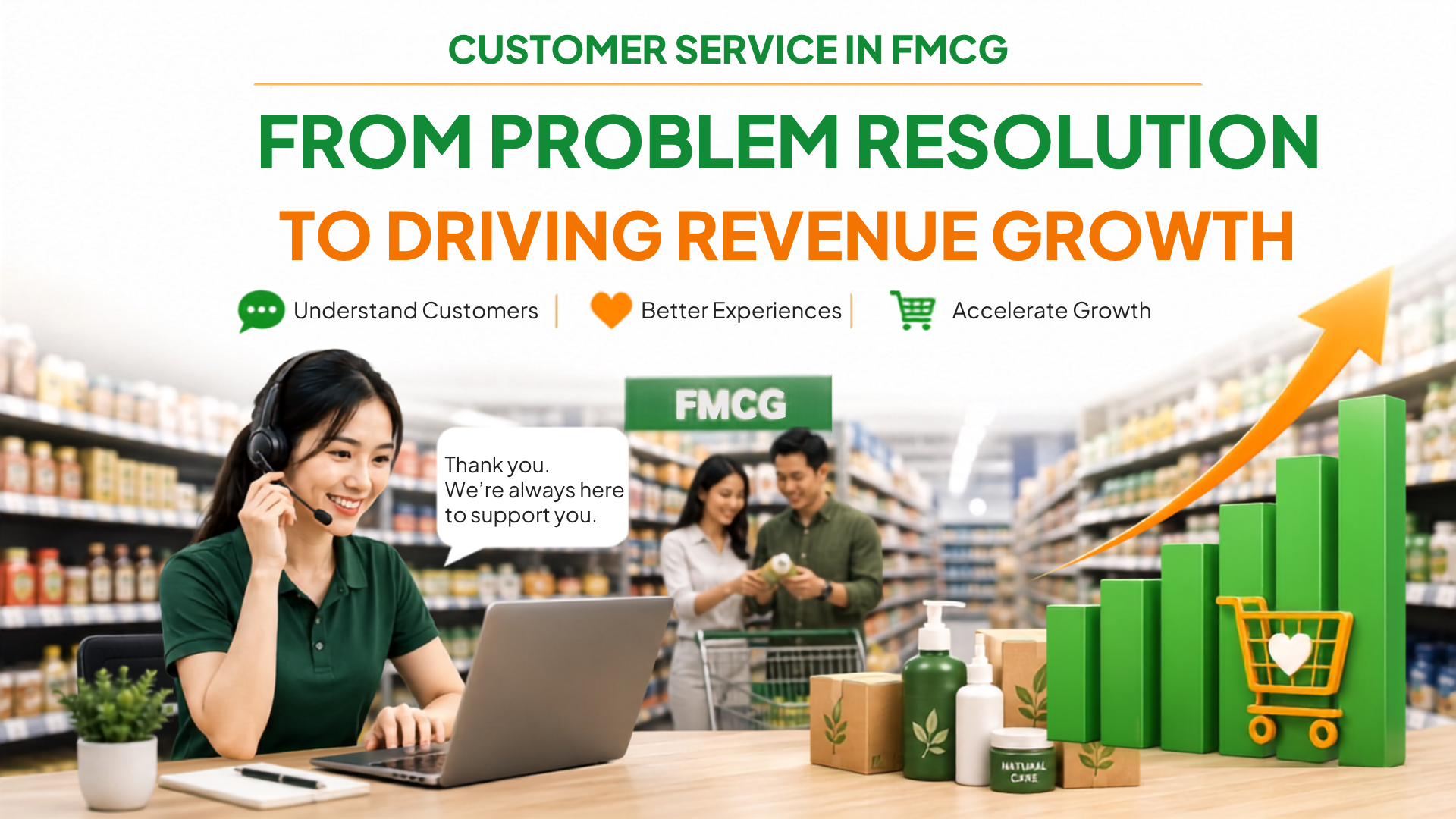
Today, most FMCG (Fast-Moving Consumer Goods) businesses still position Customer Service (CS) as a “Cost Center” - a function responsible for replying to inboxes, handling complaints, processing returns, or providing after-sales support. However, evolving consumer behavior and the rise of social platforms and messaging applications are proving otherwise: Customer Service can become a true “Profit Center” - a direct revenue-generating channel through personalized experiences, stronger repurchase behavior, and intelligent up-sell and cross-sell strategies.
FMCG Has a Major Blind Spot Across the Customer Journey
Many FMCG businesses today only activate customer service when an issue occurs. As a result, CS is often viewed merely as a complaint-handling or inquiry-response function rather than a long-term value driver for the business.
This approach causes brands to miss three critical opportunities: leveraging customer data to gain deeper behavioral insights, maintaining regular engagement to encourage repurchase and upselling, and proactively identifying early signs of declining customer experience before consumers disengage from the brand.
In today’s experience economy, repeat purchase decisions are influenced not only by product quality but also by post-purchase experience, response speed, and the customer’s perception of how much the brand genuinely cares.
More importantly, in an era shaped by data and technology, Customer Service should no longer remain a reactive operational system. FMCG businesses need to redefine the role of CS with a more proactive approach, leveraging data to better understand customers, enabling omnichannel engagement, and applying technology to address customer needs even before the next purchase decision is made.
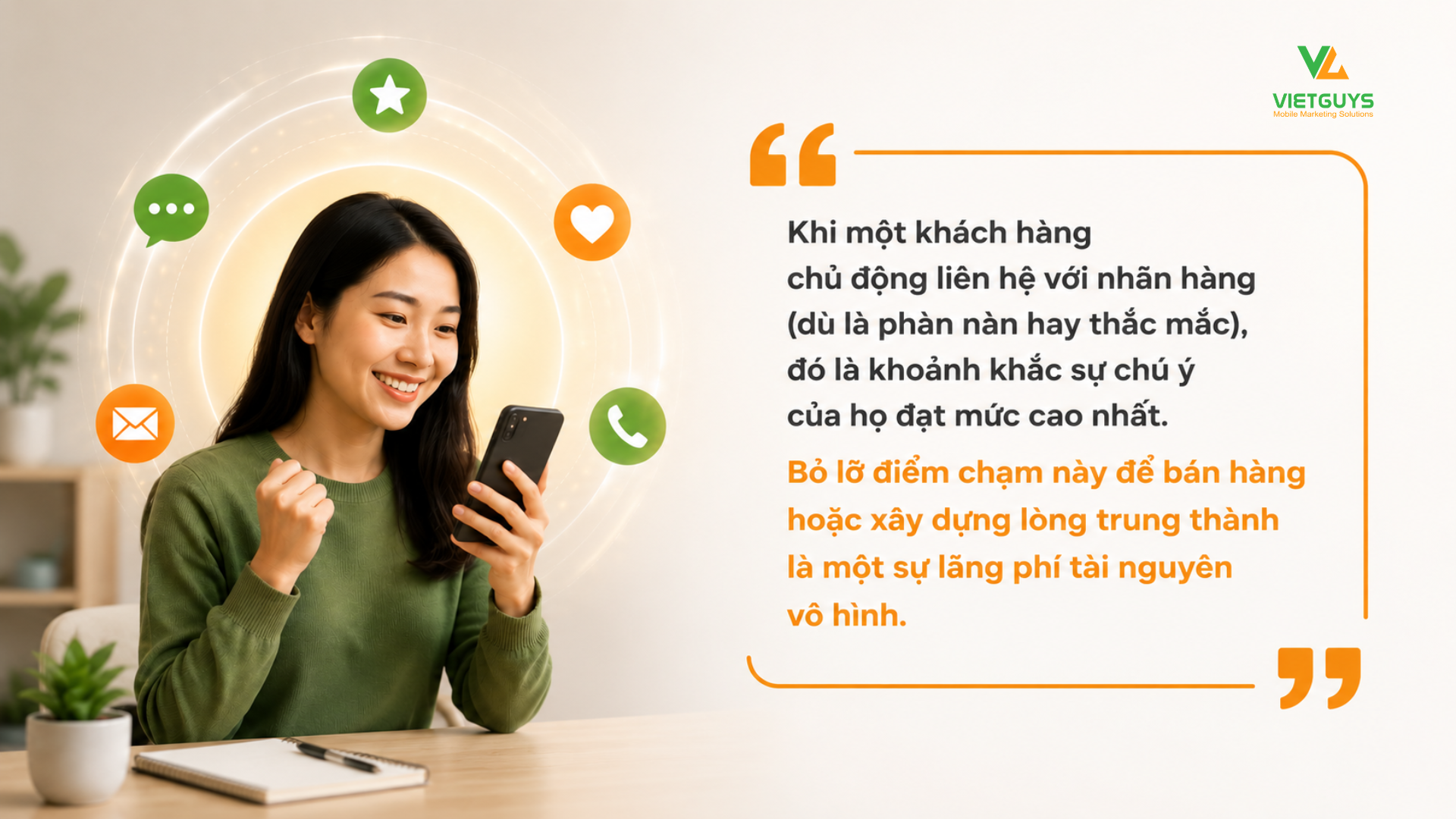
Moving from “Cost Center” to “Profit Center”: Turning Customer Service into a Revenue Driver
Generating revenue through Customer Service does not mean turning customer support agents into aggressive sales representatives. A profitable Customer Service strategy starts with proactively delivering value, personalizing customer touchpoints, and creating the most seamless path toward the next purchase.
To achieve this transformation, FMCG customer service strategies should evolve around three core pillars:
- Proactive Engagement: Instead of waiting for customers to encounter problems, brands should proactively reach out to gather feedback and understand customer experience immediately after a transaction is completed.
- Right Timing: Leverage customer data to predict product consumption cycles. For example, laundry detergent may run out after approximately three weeks, infant formula may be consumed within two weeks. Based on these insights, brands can send timely reminders that encourage repurchase exactly when customers need them.
- Seamless Purchase: Customer Service communication should go beyond simply saying “Thank you.” Every interaction should include an immediate repurchase solution through clear calls-to-action and direct links to checkout pages or e-commerce platforms. For example, instead of: “Thank you for your feedback. We appreciate your input.” A revenue-oriented customer service scenario would be: “Thank you for sharing your feedback. To make up for your less-than-perfect experience, we’d like to offer you a 30% voucher for our premium Product X. You can place your order directly through this message.”.
Omnichannel Messaging Strategy: Unlocking Revenue Through Customer Service
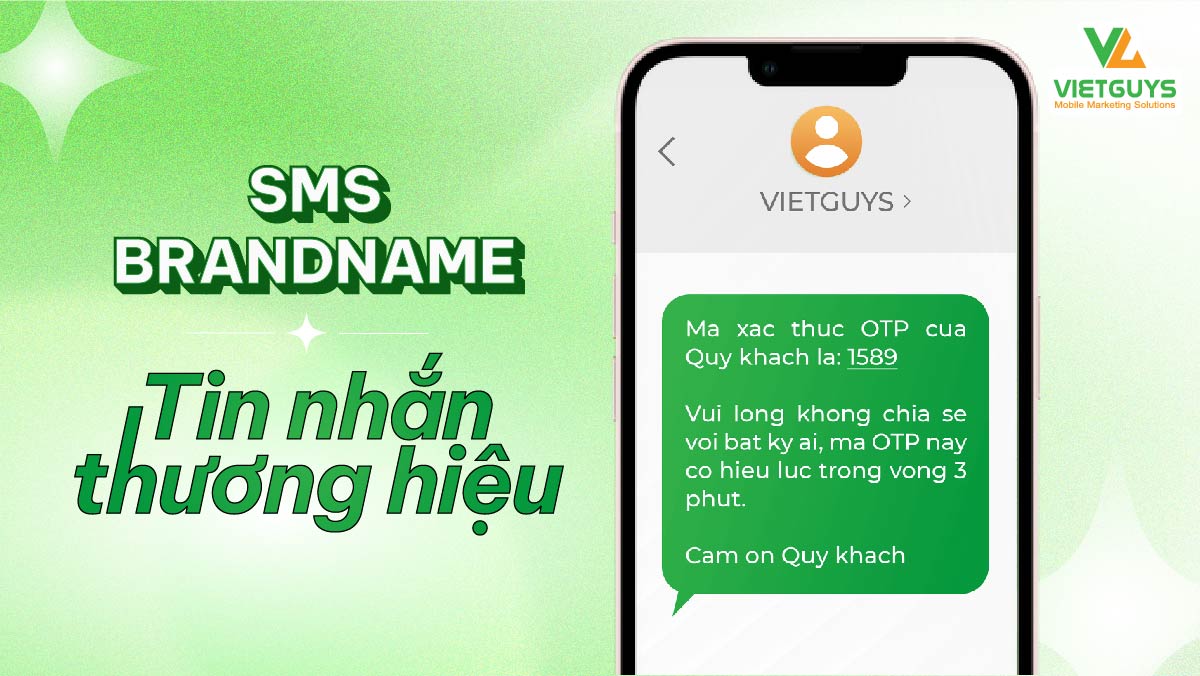
Executing this strategy across millions of FMCG customers cannot rely on manual workflows or traditional SMS alone, which often face limitations in character count, visual capabilities, and cost efficiency. The rise of omnichannel messaging strategies through Zalo ZBS, Viber Business Messages, Top-up, Email, OTP, Rewards, and other digital channels provides the ideal technology layer to scale engagement and revenue generation.
1. Rich Media Engagement to Drive Direct Conversion
Rather than sending plain-text SMS messages, OTT messaging enables FMCG brands to deliver visually engaging customer service experiences:
- Integrate high-quality product images or instructional videos
- Embed interactive CTA buttons such as: “Buy Now”, “Save Voucher”, “Collect Loyalty Points”. Example: A diaper brand could send a Zalo ZBS message: “Looks like your baby may be running low on diapers. Here’s a free shipping voucher plus 10% off your next Size L pack. [Order Now]”
2. Automating Repurchase Campaigns
When integrated with CRM systems, omnichannel messaging platforms can automate customer journeys based on purchasing behavior.
- Refill reminder: Trigger reminders based on expected product depletion cycles.
- Up-sell / Cross-sell: Recommend larger bundles or complementary products. Example: A customer purchases toothpaste. One week later, the brand sends oral care tips along with an exclusive offer for mouthwash. Highly personalized Customer Service messages delivered at the moment of intent can consistently outperform traditional display advertising in conversion rate (CR).
3. Optimizing Operational Costs
With flexible pricing models, re-engaging existing customers through omnichannel messaging strategies often costs significantly less than Retargeting Ads or telesales. The budget savings can then be reinvested into more attractive loyalty programs and customer retention initiatives.
Three Practical Scenarios FMCG Brands Can Implement Today
Conclusion
In today’s highly competitive FMCG market, there is no room for redundant customer touchpoints. It is time for businesses to adopt a new perspective: Customer Service is no longer the final stage of the customer journey, it is the starting point of the next purchase cycle. By integrating omnichannel messaging solutions into CRM strategies, FMCG brands can move Customer Service beyond its traditional “Cost Center” label and transform every support interaction and customer response into measurable, sustainable revenue opportunities.
Contact VietGuys here to explore how an omnichannel messaging ecosystem can help your business scale customer engagement while optimizing operational costs.
Read more




VIETGUYS JOINT STOCK COMPANY

|
1st & T Floor, HBT Building, 456-458 Hai Ba Trung, Tan Dinh Ward, HCMC |

|
028 - 7300 8027
 0933331840
|

|
info@vietguys.biz |
TUTORIAL
VIETGUYS JOINT STOCK COMPANY
Address: 1st & T Floor, HBT Building, 456-458 Hai Ba Trung, Tan Dinh Ward, HCMC
Hotline: 028 - 7300 8027 | 0933331840
Email: info@vietguys.biz
@2021 VietGuys. All Rights Reserved.

EXPERT